Belta: A Fun All‑Caps Handwritten Font for Makers
Sitting at my desk with a fresh batch of matte candle labels, I finally unzipped the Belta folder and immediately felt that little spark of creative joy. This Script Handwritten font isn’t just another set of letters — it has the energy of a happy brush pen dancing across a page, and that personality completely changes how a product feels before the first scent even hits.
Belta for Candle Labels and Boutique Product Packaging
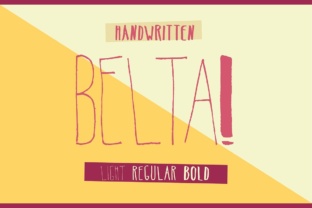
Belta is a stunning and fun all‑caps handwritten font, and the moment I typed a scent name in all capitals, the label stopped feeling like a template and started feeling like a handmade brand. I tested it on frosted jars, kraft stickers, and clear glossy sheets, and the handcrafted charm held up beautifully. Because this Script Handwritten typeface leans into playful, informal strokes, it makes short product names become the hero of the design. Small batch candle labels, soap wraps, and lip balm tubes instantly gain a warm, boutique‑counter feel that feels intentional rather than fussy. For packaging design where the name is everything, Belta turns ordinary titles into display‑worthy moments without overpowering the rest of the label.
Belta Font Readability on Small Labels and Sticker Sheets
Testing Belta on tiny round stickers was my real honest moment. Because it’s an all‑caps handwritten font with varying letter widths and slightly bouncy baseline, I recommend keeping it at around 18 pt and above for crystalline print results — especially for glossy surfaces where thinner strokes might fade. On matte kraft paper, the personality held even at smaller sizes, but the sweet spot was definitely product titles, header words, and featured names. I wouldn’t use it for dense ingredient lists or long regulatory text, but for the heart of the label — the product name — it’s a total showstopper. When paired with a clean sans serif font for secondary details, the contrast makes the Belta word jump out with clear brand identity and a cozy maker‑market vibe.
Using Belta on Greeting Cards and Handmade Invitations
I slid a “happy birthday” headline onto a folded A2 card mockup and Belta immediately turned a simple phrase into a celebration. As Script Handwritten Fonts go, this one carries exactly the right amount of movement — looped ‘L’s, slightly uneven terminals, and that delightful stretched‑hand look that feels personal rather than polished‑to‑perfection. For birthday invitations, bridal shower details, and even rustic wedding enclosure cards, the all‑caps nature keeps the layout structured while the handcrafted letterforms soften everything. If you design stationery for digital download shops, this display font gives your listing previews that “warm gathering” emotion that customers often hunt for. I found it especially lovely for short featured lines like “You’re Invited” or “Love Always,” where the playful charm becomes the entire mood of the invitation suite.
Belta for Wedding Welcome Boards and Event Signage
When I mocked up a large welcome sign using Belta, the letters held their personality at poster sizes without looking childish. Because it’s an informal yet structured display font, it feels equally at home on acrylic boards, wooden signage, and canvas banners. The slight irregularities in stroke weight actually become a feature at scale — they add that just‑drawn freshness that couples look for in modern farmhouse or boho celebrations. Pair it with a delicate serif font for the date and venue lines, and you get a layered, editorial brand identity without needing a calligrapher on‑site. For makers selling printable wedding bundles or SVG template sets, this single typeface can act as the decorative anchor across welcome notes, table numbers, and seating charts.
Belta on Mugs, Totes, and Craft Cut Projects
I loaded a simple “home” design into my cutting software using Belta, and watching the blade trace those uneven, friendly capitals was pure satisfaction. Because this handcrafted font steers clear of ultra‑thin hairlines, it weeded cleanly and pressed onto a canvas tote without losing the characteristic bounce. For iron‑on vinyl, sublimation mugs, and throw pillow covers, Belta gives you that cheerful “hand‑lettered” finish that shoppers love on craft store shelves. The all‑caps structure also means you don’t have to wrestle with lowercase descenders cutting into the weeding box — a tiny detail that makes a big difference during production runs. For Cricut and Silhouette users, I recommend sizing words a touch larger than you might with a mono‑weight sans, just to let those organic strokes breathe, but the payoff is a truly hand‑made look that commercial fonts rarely achieve.
Belta Font Pairing Tips for Product Mockups and Shop Branding
While testing Belta across sticker sheets, apparel tags, and digital product previews, I discovered it has a natural friendship with clean, neutral partners. A geometric sans serif font like a light Montserrat or a simple condensed grotesk lets the Belta word stay playful while anchoring the design in readability. For a more editorial packaging look, try pairing it with a crisp serif font in small caps for subtext — the contrast between flowing handwritten energy and structured printed lines feels incredibly current and premium. When you’re creating cohesive shop branding, use Belta as the “voice” font for hero texts and logo‑style names, and dedicate a secondary commercial font for descriptions, social handles, and website details. This layered approach builds a recognizable brand identity without crowding the visual space.
What to Check Before Selling Products with Belta
Before you press “publish” on that new candle collection or invitation template, double‑check a few production essentials. Belta ships as a standard OTF/TTF file, which means it’s ready for most design software, but you’ll want to look for included stylistic alternates or ligatures if the purchase mentions them — having those extra glyphs can give your product shots even more customized flair. The commercial licensing terms matter deeply for handmade businesses: verify that the font licensing covers physical end products, print‑on‑demand usage, and digital template resale if that’s your model. Most independent Script Handwritten Fonts now include friendly seller terms, but always read the included license file. Also, test print at actual size on your material; Belta’s bouncy rhythm is beautiful, but for ultra‑tiny text below 12 pt, I’d steer toward a simpler display font or clean subtext typeface. When used right, this font becomes the unmistakable heart of a product line — approachable, joyful, and completely maker‑ready.