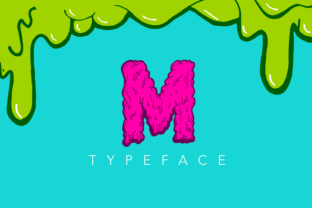
Monstrocity Decorative Font for Bold Digital Headlines
Monstrocity is a decorative font designed for impact—not subtlety. With its ornamental character set, full punctuation, and numerals included, Monstrocity delivers visual authority at scale. As a web designer who ships landing pages, SaaS dashboards, and boutique e-commerce sites, I reach for Monstrocity when I need a headline font that commands attention without sacrificing clarity or licensing safety. It’s not built for body text—but it excels where digital real estate is premium: hero sections, banner overlays, course title cards, and brand-driven call-to-action zones.
Monstrocity for Hero Sections and Landing Page Headlines
Monstrocity is a decorative font engineered for large-format readability—making it ideal for hero section headlines on responsive websites. Its ornamented nature adds texture and personality without collapsing on mobile viewports, especially when paired with generous line-height and letter-spacing in CSS. I use Monstrocity at 48–96px on desktop and scale down to 36–42px on mobile with viewport-relative units (e.g., clamp(36px, 5vw, 96px)). Because Monstrocity includes numbers and punctuation, you can confidently set pricing headlines (“From $299”, “Limited to 50 Spots”), dates (“Oct 2024 Launch”), or value-driven statements (“No Code. No Hassle.”) without switching fonts mid-sentence.
Monstrocity for Online Store Banners and Product Launch Graphics
Monstrocity is a decorative font that elevates product storytelling across Shopify banners, WooCommerce promo strips, and digital ad creatives. Its strong glyph contrast and confident stroke weight ensure legibility even over busy background images or gradient overlays—critical for conversion-focused layouts. When used for limited-edition drops (“Summer Edit • Now Live”), seasonal collections (“Holiday Vault • Opening Nov 1”), or flash sale tags (“24-Hour Sale • Ends Tonight”), Monstrocity reinforces urgency and exclusivity. Just avoid using it for price labels smaller than 24px or for filter navigation—stick to clean sans serifs there.
Monstrocity for Creative Portfolio Sites and Brand Identity Systems
Monstrocity is a decorative font that communicates craftsmanship and intentionality—perfect for designers, illustrators, and creative studios building portfolio sites with distinct voice. I embed Monstrocity as a self-hosted WOFF2 file for fast loading and full control over font-display behavior (swap or optional). On portfolio project cards, I pair Monstrocity with Inter or Manrope for body copy—creating clear visual hierarchy while keeping load times under 100ms. Its inclusion of punctuation means client names (“Studio Lume • Berlin”), project years (“2023”), and category tags (“Branding • UI • Print”) stay typographically unified. For brand kits delivered to clients, Monstrocity works seamlessly in Figma auto-layouts and CSS-in-JS systems alike.
Monstrocity for Course Sales Pages and Digital Education Layouts
Monstrocity is a decorative font that strengthens perceived value on course sales pages, webinar landing pages, and membership site headers. Its ornamental details signal premium positioning—especially effective for coaching brands, design academies, or SaaS onboarding flows. Use Monstrocity for H1s like “Master UI Animation in 8 Weeks” or “Your First Figma Plugin—Built & Shipped”, then drop into a neutral sans serif (e.g., Space Grotesk or IBM Plex Sans) for bullet points, testimonials, and CTA buttons. Since Monstrocity includes numbers, you can style key metrics directly (“12 Modules”, “37 Downloadable Assets”, “Lifetime Access”) without breaking rhythm or requiring fallback fonts.
Monstrocity for Blog Headers and Editorial-Style Web Content
Monstrocity is a decorative font that transforms blog headers from functional to memorable—ideal for editorial-style blogs, founder newsletters, or content-led SaaS sites. Unlike script or handwritten fonts, Monstrocity maintains structural integrity at 32–40px sizes, making it highly scannable on both light and dark mode interfaces. I apply it selectively: only to main post titles, series headers (“The Accessibility Series”), or newsletter subject lines rendered as inline SVG for crispness. Avoid using Monstrocity for subheads or pull quotes—it’s strongest when it anchors, not decorates. And because it includes punctuation, em dashes, colons, and quotation marks render natively—no Unicode workarounds needed.
Monstrocity for Dark Mode Interfaces and High-Contrast Layouts
Monstrocity is a decorative font that performs reliably in high-contrast digital environments—especially against deep charcoal or true black backgrounds. Its thick strokes and open counters prevent visual “muddying” common with delicate display fonts. I test Monstrocity at 48px on #0A0A0A with #FFFFFF text and confirm readability via axe DevTools and manual iOS/Android checks. For image overlays, I add a subtle 1–2px text shadow (text-shadow: 0 1px 2px rgba(0,0,0,0.5)) to reinforce separation. Monstrocity’s included numbers also mean pricing modals, feature comparison tables, and version badges (“v2.4.1”) retain tonal consistency—even in system-dark contexts.
Monstrocity Font Pairing Strategies for Modern Web Design
Monstrocity is a decorative font that thrives in contrast—so pairing is non-negotiable. For UI-heavy sites (dashboards, admin panels), I pair Monstrocity with a highly legible, low-x-height sans serif like Inter or Recursive—ensuring form labels, tooltips, and status badges remain frictionless. For editorial or luxury-facing sites, I combine Monstrocity with a refined serif like Literata or Crimson Pro for body copy, letting the decorative font anchor headings while the serif carries narrative weight. Never pair Monstrocity with another decorative or script font—that dilutes hierarchy and increases cognitive load. And always verify that your chosen pair supports the same languages and OpenType features you need.
Monstrocity Licensing for Commercial Web Projects and Client Work
Monstrocity is a decorative font distributed as a commercial font—meaning it’s licensed for use across live websites, client deliverables, SaaS platforms, online stores, and digital templates. Before embedding, confirm your license covers webfont usage (WOFF/WOFF2), number of domains, and whether it permits resale in design system kits or Figma community files. Most reputable vendors include desktop, web, and app licenses in one bundle—so you’re covered for Figma prototypes, production builds, and client handoff assets. Monstrocity’s inclusion of punctuation and numbers simplifies compliance: no need to license supplemental fonts just to display prices or dates correctly.